







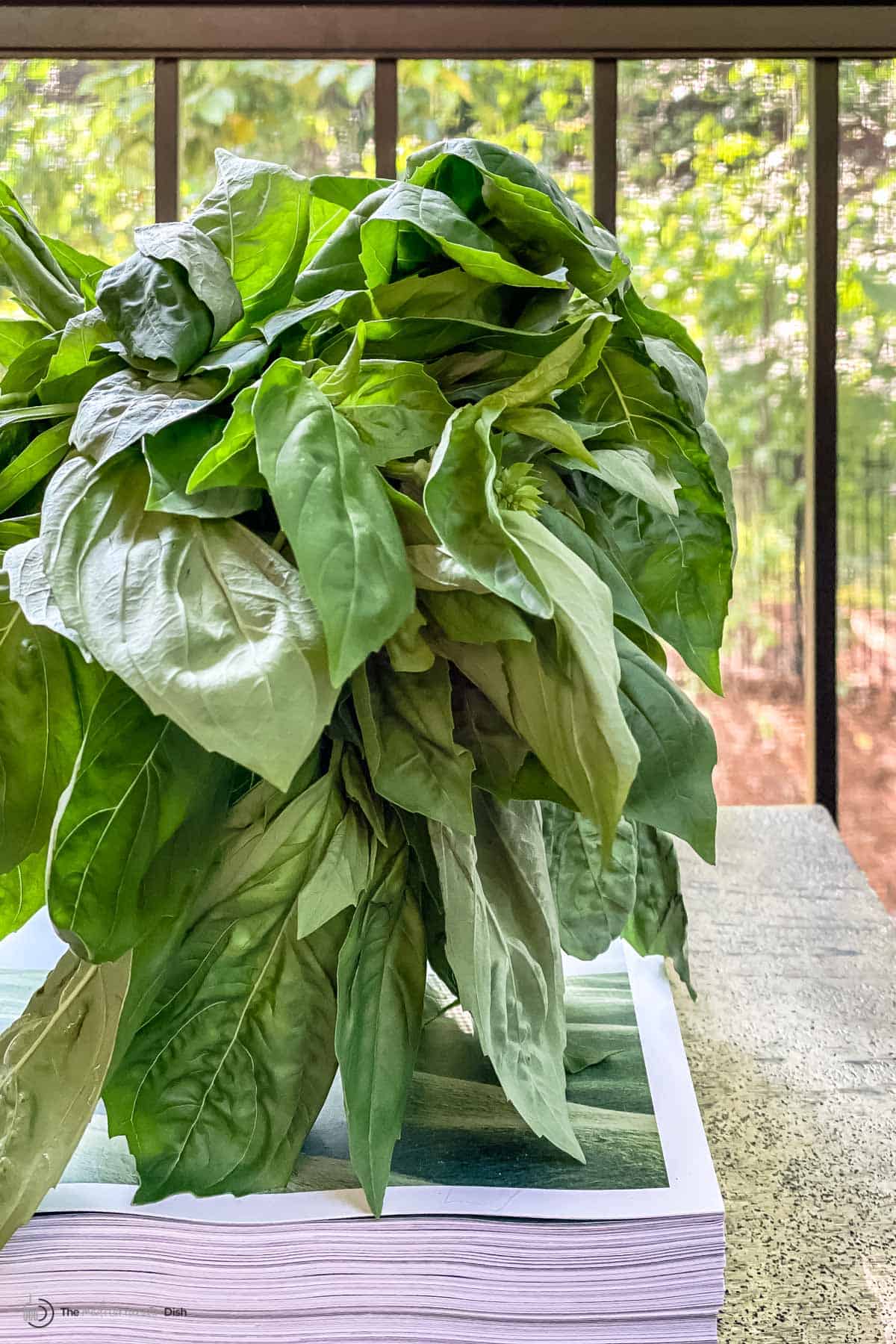
Follow my tips on how to store basil so it lasts as long as possible, and my favorite ways to use it before it goes bad.
How to Store Fresh Basil in My Mediterranean Kitchen
Fresh basil is one of the herbs widely used in Mediterranean cooking, and almost everyone I know enjoys its aromatic, sweet, and somewhat minty flavor. It adds a splash of fresh flavor and color to recipes like panzanella, tomato basil soup, and grilled pizza!
Because fresh herbs are so widely used in Mediterranean cooking, I’ve learned a thing or two over the years about how to make them last as long as possible. When it comes to storing basil, I treat it a little differently than other tender herbs like cilantro or parsley.
How to Store Fresh Basil
To store fresh basil so that it lasts up to 2 weeks, treat it almost as you would freshly cut flowers. You’ll need a glass jar filled halfway with water, a pair of scissors, and a recycled shopping bag. Follow these simple steps:
- Cut the basil stems: Take a pair of scissors and cut 1/2 inch of the stems at a 45-degree angle, as you would a bouquet of flowers.
- Put the basil in a pot with water: Fill a jar, vase or glass halfway with water and place the basil bunch (cut stems side down) into the water. Make sure no leaves are in the water or they will turn dark and slimy.
- Cover with a plastic bag: Cover the leaves and the entire pot of basil loosely with a plastic bag.
- Store at room temperature: Leave the pot of basil covered on your kitchen counter. I don’t recommend storing basil in the refrigerator, as the cold can easily damage the leaves and turn them black, even if they are covered.
- Cut the stems and replace the water from time to time: Don’t abandon your bouquet of basil! Change the water every few days and give the stems a small fresh cut.
How long will fresh basil last?
If you follow my method above and store fresh basil properly in a jar of water covered with a plastic bag, it should stay fresh for up to 2 weeks.
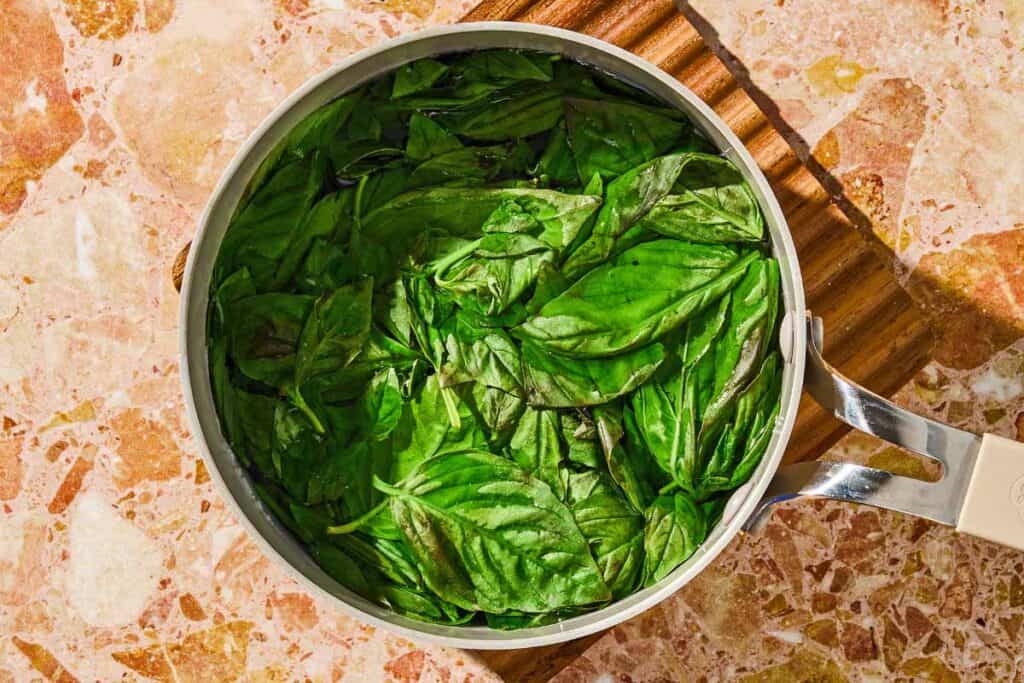
Ways to Store Fresh Basil
Can you freeze basil?
Yes! If you have way too much basil and want to store it longer, freezing it is a great option. It will keep in the freezer for months and you can use it all year round!
Prepare basil cubes:
- Chopped basil and add it to a medium bowl.
- Add the olive oil in the bowl with the chopped basil.
- Pour into an ice cube traybut leave a little room at the top. If basil is exposed, simply top it off with a little more olive oil.
- Freeze: Place the ice cube tray in the freezer. Once frozen, remove the basil cubes from the tray and transfer them to a freezer-safe container. Use it as needed to add flavor to soups, sautéed vegetables, boiled potatoes or even defrost on a plate, add a little salt, pepper and parmesan and use as a dip for crusty bread.
Freeze basil leaves:
- Blanch the basil. Throw the basil leaves into the boiling water for 10 seconds, then quickly remove them and put them in a bowl of ice water. This will help preserve the bright green color. I always blanch my basil when making pesto for the same reason.
- Dry. You can put the blanched basil in a salad spinner and give it a few spins, but I also like to wrap it in paper towels and squeeze it well to squeeze out all the water.
- Freeze. Start by separating the blanched leaves and arrange them on a cookie sheet, then freeze them for about 12 hours, then transfer the frozen leaves to a freezer-safe bag (do this very quickly or the leaves will thaw). Seal tightly and return to the freezer.
Make pesto!
One of my favorite ways to quickly use and preserve fresh basil is to make homemade pesto! A jar of my pesto will last for a good week in my refrigerator, and you can freeze it for up to 6 months! Use pesto in pasta, as a sandwich spread, or drizzled over fish.
Recipes for using fresh basil
Tearing basil or roughly chopping it and mixing it into a recipe is an easy way to use it. Here are some of my favorite recipes using fresh basil.
- Peach salad with arugula, basil and goat cheese
- Prosciutto and Basil Open-Face Sandwich
- Eggplant Parmesan
- Vegetarian sandwich with creamy whipped feta
The article How to Store Basil Fresh appeared first on The Mediterranean Dish.
PakarPBN
A Private Blog Network (PBN) is a collection of websites that are controlled by a single individual or organization and used primarily to build backlinks to a “money site” in order to influence its ranking in search engines such as Google. The core idea behind a PBN is based on the importance of backlinks in Google’s ranking algorithm. Since Google views backlinks as signals of authority and trust, some website owners attempt to artificially create these signals through a controlled network of sites.
In a typical PBN setup, the owner acquires expired or aged domains that already have existing authority, backlinks, and history. These domains are rebuilt with new content and hosted separately, often using different IP addresses, hosting providers, themes, and ownership details to make them appear unrelated. Within the content published on these sites, links are strategically placed that point to the main website the owner wants to rank higher. By doing this, the owner attempts to pass link equity (also known as “link juice”) from the PBN sites to the target website.
The purpose of a PBN is to give the impression that the target website is naturally earning links from multiple independent sources. If done effectively, this can temporarily improve keyword rankings, increase organic visibility, and drive more traffic from search results.