








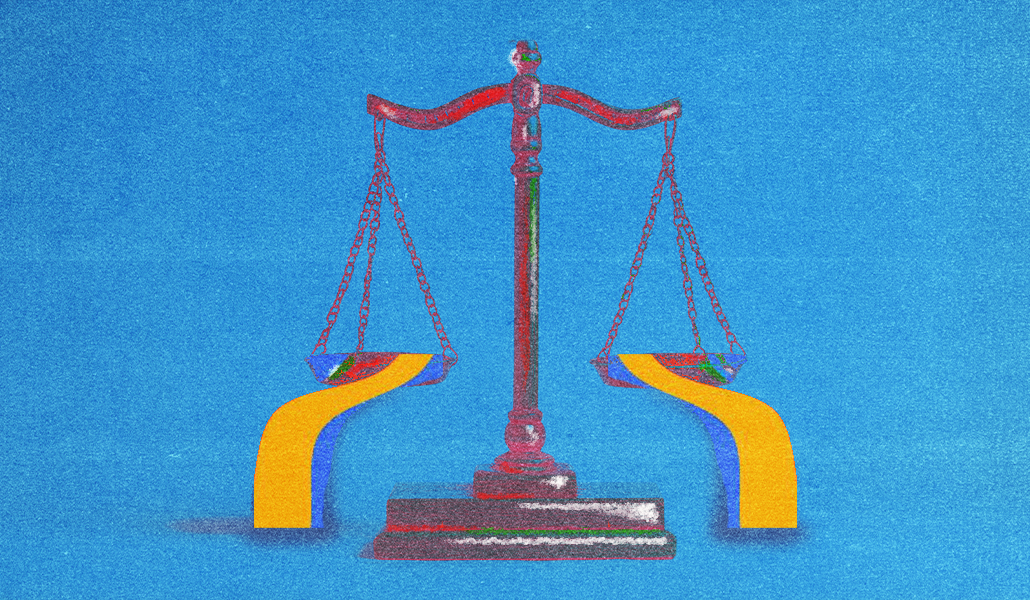
Lobby Group Movement for A Open Web has issued new calls to the Ministry of Justice in order to coordinate its proposed appeals to approach Google monopolies in cases of separate advertising research and technology in progress.
The DoJ develops remedies proposals to counter Google’s market power in research and advertising technology, which have both been governed by monopolies in the last 12 months, MOW now calling for joint technical surveillance of the two cases.
Currently, the remedies in each case are under development and will be supervised by separate technical committees, according to MOW, which now requires that these be merged, citing the need for a holistic approach to market correction.
In antitrust cases, a technical committee is a group of independent experts appointed by the court or a regulatory body, such as the DoJ, to supervise compliance with a regulation or appeal, in particular concerning the technical aspects of a case.
MOW said that a holistic strategy was essential due to the complexity and interdependence of Google activity sectors, and that unstopped remedies risk missing structural problems that support monopoly power.
The group supports the existing Doj proposals but quotes the decision of the Brinkema judge in the Ad Tech case that Google’s control over Adwords required its monopoly in the exchange of announcements. It thus calls for additional steps to allow publishers to be able, in particular the control of inventory auctions, transparency of pricing data and restrictions on the use by Google of its properties owned and used to obtain inviguments of tenders.
Tim Cowen of Mow, also president of the Preiskell & Co. antitrust practice, argued that there is potential for Google to discriminate its advertising technology practices by technical means, even after divestment, citing how its purchase of DoubleClick allowed it to take advantage of its position on the research market to dominate the advertising market.
“He blocked access to the DoubleClick ID so that third parties to become,” he told Digiday, explaining the subtleties by which the online giant was able to dominate the market. “Then, what he did was to give himself the first preview of the offers on the exchange … When it did not prove to be profitable enough, it also gave itself a last look.”
Proposed beers
The DoJ proposes to force Google to sell its Chrome browser, at the end the billions of default research payments to combined manufacturers, to concede its search index and user data to its competitors for a decade, and potentially Android desocant and apply a mandate to the choice screen to restore competition
Google ATTES These rupture requests by opposing the forced sale of chrome and by suggesting limited targeted contractual reforms and wide data sharing, or long -term surveillance.
Meanwhile, the remedy proposed by the DoJ targets the monopoly of Google’s advertising technology via a three -phase plan: first, demanding access to data in real time for rivals via prebid; Second, opening the logic of DFP auctions from Google to Open-Source; And thirdly, completely disinvesting his advertising server DFP and ADX under the supervision of the court.
After disinvestment, Google would be forbidden to operate an exchange of ads for 10 years. In addition, 50% of net ADX and DFP income would be placed in the whole to support the transition from the publisher and the development of independent auctions. Google’s counter-controls have recommended more limited reforms to avoid breaking, including access to ADX data in real time, the end of unified pricing rules and renunciation of the advantages of auctions.
Yesterday’s war?
During the advertising week in New York last year, industry leaders wondered if the break offered by the DoJ of Google advertising technology would significantly change the landscape. Some argue that Google already has one step ahead of regulators, citing its domination as a deterrent in competition and suggesting that remedies can be too late to have importance.
Many are divided on the rupture of a break or ultimately cure the advertising technology ecosystem, some arguing that the only effective means of Google would be hamstrings. “I think that the Doj is now fighting yesterday’s war. No matter the result, the damage is caused, and when they have the remedy, the environment will be so different,” said Justin Choi, CEO of Nativo, on a panel of the week of advertising.
Mow’s Cowen also said that without adequate and joint monitoring of technical remedies, Google can take measures to escape any effective Market intervention. “The idea of the remedy is that the entity sold [either AdX, Chrome, or DFP] Has no interest in Google, “he said, adding that many contractual remedies – not to mention effective permanent surveillance – are also required to have the desired effect.
The judge Amit Mehta, the judge president of the antitrust case of search, is in the process of offering a decision on appeals in early August. Google can appeal the judgment within 30 days, potentially extending procedures until 2027.
Meanwhile, the phase of the remedies of the antitrust ad tech case should start on September 22.
Technology
Game Center
Game News
Review Film
Berita Terkini
Berita Terkini
Berita Terkini
review anime