








Arunachal Wushu players unable to go to China for Asian Games
In a disappointing turn of events for the promising athletes of the Wushu of Arunachal Pradesh, their dreams of representing India at the 2023 Asian Games in Hangzhou, China, were destroyed due to Visa complications. These talented athletes, who have devoted years to perfecting their skills, find themselves tangled in a bureaucratic canvas that threatens to overshadow their hard work and their commitment.
Wushu aspirants:
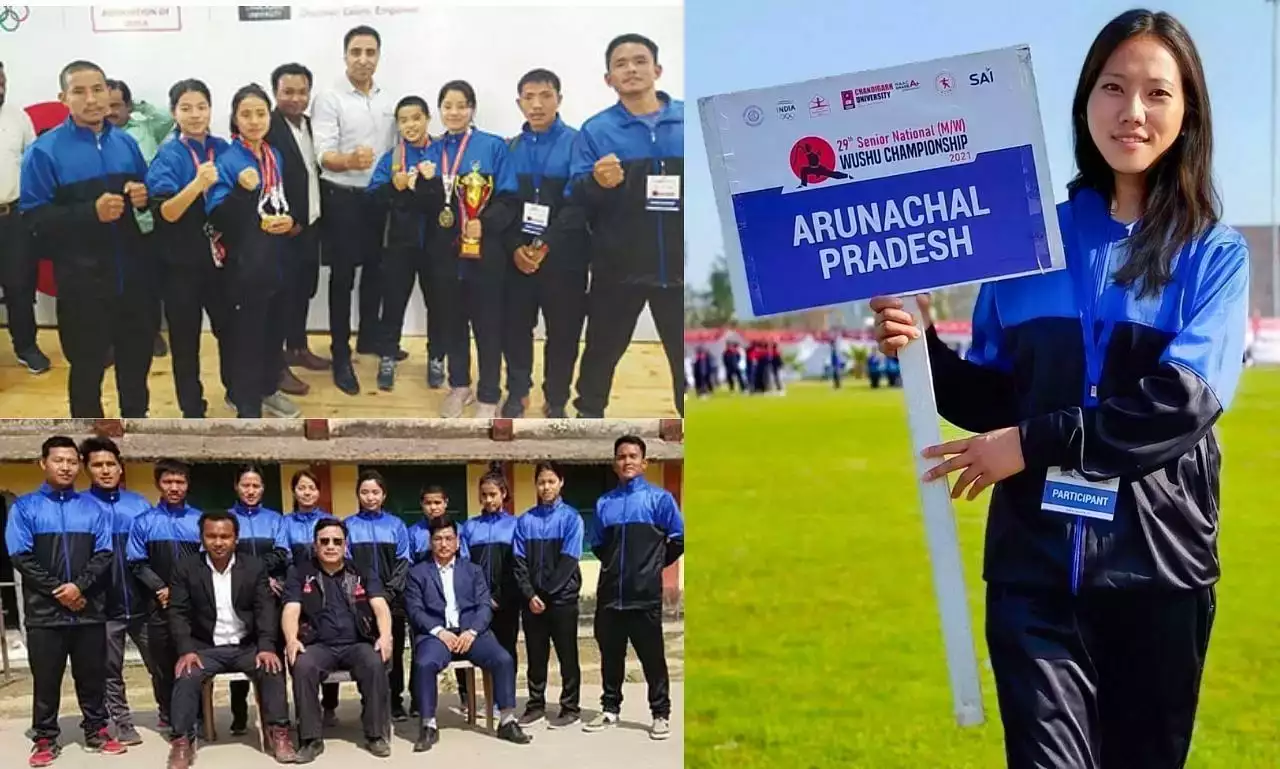
The three female athletes, Nyeman Wangsu, Onilu Tega, and Mepung Lamgu, managed to obtain their accreditation cards from the Organization Committee of Asian Hangzhou (Hagoc), which also serves as an entrance visa. Subsequently, athletes must finish the process by downloading their travel documents, which are then validated when they arrive.
However, the departure day planned for Asian games, the three Athletes of Arunachal Pradesh encountered a problem – they could not download their travel documents. On the other hand, the remaining members of the Wushu team, made up of a total of 10 players, as well as coaches staff, have not encountered any difficulty. Consequently, they carried out their travel plans, leaving for Hong Kong on Wednesday evening, where they had a connection flight to Hangzhou.
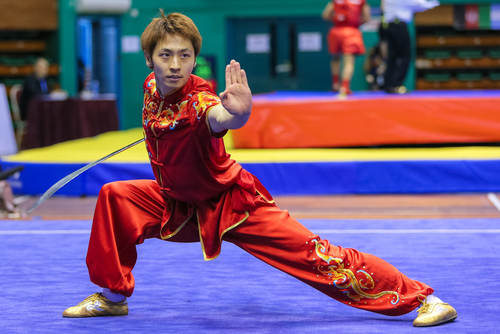
The northeast state of the Arunachal Pradesh has fueled an exceptionally talented Wushu players basin, which have always proven their courage on national and international scenes. These athletes were preparing tirelessly, both mentally and physically, to participate in the prestigious Asian games, a summit in sports realization for any athlete.
Asian games represented not only the opportunity to present their skills, but also a chance to inspire the young generation of the Arunachal Pradesh to take Wushu. The disappointment of not being able to participate in this international event is an overwhelming blow for their dreams.
National support:
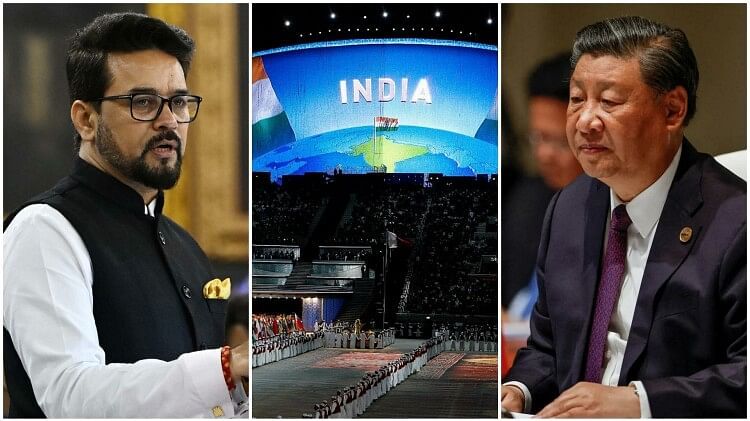
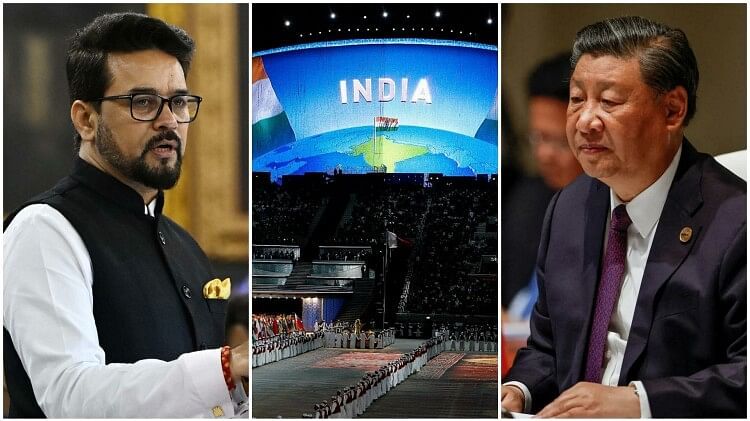
The situation drew national attention, sports authorities and athlete colleagues expressing their solidarity with the contingent of Wushu Arunachal Pradesh. The Wushu association of India has actively continued the case, engaging in diplomatic channels to seek a resolution. The Indian Ministry of External Affairs has also been approached to intervene and facilitate the issuance of visas for athletes. Union Minister of Sports, Anurag Thakur, has decided to cancel his planned visit to Asian games due to China’s refusal to give entry to the Indian athletes of the Wushu d’Arunachal Pradesh. Simultaneously, the government has filed an official protest to this decision.
This unfortunate episode highlights the complexities that often shaded the world of international sports. The intersection of politics, diplomacy and sports can have deep consequences for athletes who, in most cases, are only motivated by their passion for their chosen discipline. It is a reminder that athletes, whatever their history or their nationalities, should not become pawns in larger geopolitical games.
Visa complications:
Visa complications left the athletes and their trainers devastated and frustrated. The players had submitted all the necessary documents and their participation was supported by the Wushu Association of India. Despite the “stapled visas”, the athletes were unable to board the flight.
In addition to broader diplomatic tensions, another factor adding complexity to India China relations is the delivery of visas stored by China. This practice was a recurring problem, especially in areas like Arunachal Pradesh and Jammu-et-Cachemire. The stapled visas, such as used by China, are a symbolic gesture of their territorial claims, which effectively implies that these regions are disputed territories rather than full parties of India. This practice has not only aggravated diplomatic tensions, but also had implications for athletes and citizens of these regions, who are often faced with uncertainty and discrimination when they go to China with sporting events or other purposes. It is in this context of stapled visas, territorial disputes and political sensitivities that the refusal of visas to the athletes of Wushu from Arunachal Pradesh must be understood, emphasizing the subtleties which even permeate the world of sport. This practice was a source of diplomatic tension between India and China, because it calls into question the sovereignty of India and territorial integrity.
An stapled visa is a type of visa issued by a country which means a unique and often controversial diplomatic position. When China issues visas stapled to Indian citizens or residents of specific regions, such as Arunachal Pradesh and Jammu-et-Cachemire, it symbolizes China’s refusal to recognize the legitimacy of the individual’s travel documents. Instead of attaching the visa directly to the passport, the Chinese authorities have it separately using a basic food or another form of attachment.
By delivering visas stapled in these contexts, China sends a clear message that it does not recognize the regions in question within the framework of India. This position exacerbates existing political disputes and complicates diplomatic relations between the two countries. This also creates practical challenges for people traveling to China, because they can face uncertainty, delays or discrimination due to the stapled visa, hampering their ability to engage in various activities, including sporting events, trade and cultural exchanges.
The diplomatic angle:
The denial of visas to these young athletes not only disturbed their aspirations, but also created a diplomatic enigma. It highlights the current sensitivities in the India China relationship, which often spreads in the field of sports.
The denial of visas to the athletes of Wushu d’Arunachal Pradesh cannot be considered in isolation but must be understood in the broader context of the India China relationship, which has experienced significant tensions in recent years. These diplomatic complexities have sometimes spread in various fields, including trade, territory and sports.
One of the main problems that have set Indian-Chinese relationships is the long-standing border dispute. The real control line (lake) in the Himalayan region has been a controversial problem for decades, leading to skirmishes and military confrontations, in particular the fatal confrontation in the Galwan valley in 2020. These incidents have created an atmosphere of distrust and increased sensitivity between the two nations.
In addition, India’s position on Dalai Lama and Tibet, as well as its concerns concerning the Chinese-Pakistani Economic Corridor (CPEC), passing by the cashmere occupied by Pakistan, also added to diplomatic tensions. The assertive foreign policy in China in the Southern China Sea and its Belt and Road (BRI) initiative, which India has practiced membership, further complicates the relationship. In this climate of increased diplomatic tensions, even non -political events like sports can get tangled. The denial of visas to the athletes of Wushu d’Arunachal Pradesh can be considered to reflect this broader context, where each interaction between the two countries is examined by a political lens.
It is important to emphasize that sports and politics should ideally remain separate, allowing athletes to compete on a level field field based on their talent and hard work. However, reality often differs, as the visa problem encountered by these athletes have demonstrated. Although the situation remains difficult, it also highlights the need for dialogue and diplomacy to solve the underlying problems between India and China. Sports, with its ability to promote goodwill and understanding, can serve as a bridge between nations. It is to be hoped that diplomatic efforts to resolve this visa issue will succeed, allowing the Wushutes of the Wushu of Arunache Pradesh to participate in Asian Games and to demonstrate the power of sport to transcend political differences.
Hope for a resolution:
Although the situation seems dark for the moment, there remains a glimmer of hope that a resolution can be reached. It is imperative that the authorities concerned, both in India and in China, recognize the aspirations of these athletes and the role of sports in the promotion of harmony and understanding between nations.
When athletes from different countries compete in the field or in court, they are linked by a common set of rules and a shared pursuit of excellence. In these moments, political ideologies and diplomatic tensions date back to the universal language of competition, respect and fair play. Sports events such as the Olympic Games, the FIFA World Cup and Asian games offer a platform where athletes and spectators can meet, celebrating diversity and promoting mutual understanding. They remind us that regardless of our nationalities or history, we can find common ground through sport, the promotion of good will, friendship and peace beyond the limits of politics.
Conclusion:
The fate of the Wushu athletes from Arunachal Pradesh serves as a poignant recall of the challenges that athletes face beyond the arena. These young men and women deserve the opportunity to compete on an international scene, representing not only themselves but also their state and their country. The denial of visas deprives them not only of this chance, but also reduces the spirit of the sporting spirit and camaraderie that international competitions like Asian games embody.
As enthusiasts of sport and citizens, we hope that a rapid and positive resolution is obtained, allowing these talented athletes to continue their dreams and inspiring generations to come. Asian games should be a unit platform, no division, and it is our collective responsibility to guarantee that sport transcends borders and policy for the improvement of all.
Technology
Game Center
Game News
Review Film
Berita Terkini
Berita Terkini
Berita Terkini
review anime