








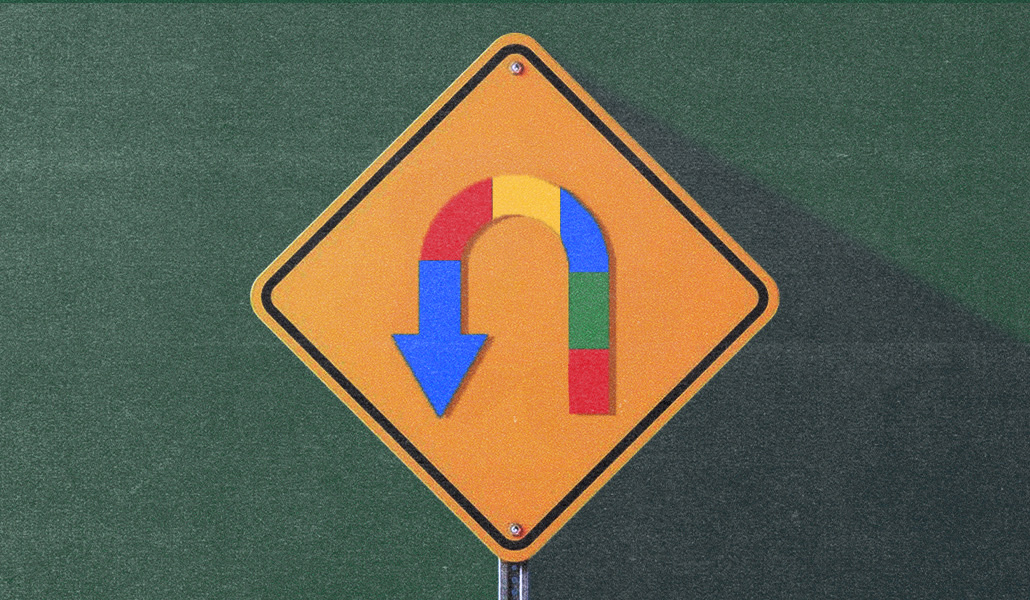
After more than half a deception of delayed deadlines, government surveillance and intestine industry struggles, Google has met many expectations: a U-turn on third-party cookies of Chrome.
For some, that spends the death of Sandbox of private life – a project dates back to August 2019 – with criticisms pointing to the proximity of Google vice -president, Sandbox of privacy, the announcement of Anthony Chavez this week to his successive antitrust reprimands earlier in the month.
Basically, such voices ask the question: “Does the last round of Google Chrome cookies represent a peace offer now that it faces several rupture scenarios?”
Despite this, Google takes its public functions from a utility approach to support the media ecosystem supported by advertising, noting that it will continue to explore the use of confidentiality sandbox APIs in the coming months.
To quote Chavez’s blog post yesterday: “We have made the decision to maintain our current approach to offer users a choice of third-party cookies in Chrome, and will not deploy a new autonomous prompt for third-party cookies. Users can continue to choose the best option for themselves in the confidentiality and security parameters.”
Meanwhile, the plethora of companies (including advertising technology, publication agencies and outfits) which have spent in the past six years investing time, money and efforts by investing in alternatives from cookies wondering: “Is that a waste of time?”
Moved before being pushed?
According to Movement for A Open Web’s James Rosewell, a vocal critic of the confidentiality sandbox, the apparent Google retirement from the Sand Tank of confidentiality marks a significant passage of previous efforts to centralize the control of digital advertisements and eliminate interoperability.
“Regulators move to guarantee interoperability as they do in other sectors such as telecommunications and public services,” he told Digiday in a written declaration, adding that “Google was moving before being pushed.”
For Mathieu Roche, CEO of ID5, the moment of Chavez’s announcement could Represent the online giant offering an olive branch to government authorities such as the United States Ministry of Justice, which is pressure for the sale of Google Chrome and its advertising technology on the sale in separate legal affairs.
“I do not believe in coincidences regarding Google … I have the impression that it is a kind of negotiation tactics with the doj to prevent Chrome from being turned,” said Roche, noting that Google is likely to emphasize how it is best placed to preserve the confidentiality of web users.
Meanwhile, several sources consulted by Digiday have underlined the time of Chavez’s last announcement, and its proximity to the recent decision of $ 162 million against the Apple Apple Applications Transparency Solution as a more likely motivation for the latest Google U-turn.
Balancing
However, in the experience of Andrew Casale, CEO of Exchange index – a company that participated in an experimentation of confidentiality sandbox – Google is a much more intentional player, even if it faces several regulatory challenges at the moment.
“I think it is a very reasonable speculation on the back of the guilt verdict last week and the search for recourse to research this week, but I would look at it a little differently,” he told Digiday, citing the multiple repulties of chronology in the past six years.
Instead, Casale said that Google’s delayed deadlines highlighted Google’s efforts to continue business as usual, for itself and third parties, while trying to satisfy the growing voices of the online confidentiality lobby.
He added: “And I think that in some cases, these two regulatory problems can be in contradiction with each other, and I think that, as regards the cookie, they were trying to find a very delicate balance between the two problems, which became more and more problematic.”
Jay Pattisall, vice-president and analyst of senior agencies at Forrester, echoes this evaluation, adding how the calendar for years gave both advertisers and sufficient service providers to explore different options and experiments.
“The kind of slow but regular and methodical approach was at least an attempt to give not only to Google as a publisher, but all its customers and partners are the opportunity to approach this very slowly and when and, and, you know, now slowly far from that, right?” Pattisall said.
The benefits of Google Chrome’s cookie?
Although expected by many years of strategic planning now require recalibration, tens, even hundreds, online media companies passing a large part of the 2020s in the process of shaping their strategic orientation around online guardians’ confidentiality policies, such as the mobile operating system and suppliers of navigators like Google and Apple.
Distinct Digiday sources that have experienced a lot with the confidentiality sandbox API noted how (although planned) confirmation of the last movements was a closely kept secret among the leaders of Google. Such sources have also indicated how the development of the confidentiality of the sandbox is likely to occupy a large part of the meetings involving the Google management team at the conference of the next week’s industry tent.
Such a source, which requested anonymity in order to maintain industry relations, took note of generalized frustration. “The fact that this company has so much market power that they have run for five years just so as not to go ahead … F * CK Google.”
Rosewell de Mow has echoed these feelings, noting the extent of the collective effort invested in exploring proposals for Google’s confidentiality bins in recent years, adding that “millions of endless hours and dollars have been wasted by companies in preparation”.
He added: “It is unforgivable and should add an additional emergency to the movements of the DoJ, the EU and the United Kingdom to definitively cut Google and the Apple wings with antitrust actions.”
Meanwhile, Roche d’Id5 – which founded the said company to offer the industry another advertising targeting solution to third -party identifiers in 2017 before the confidentiality sandbox – advised advertisers to continue efforts to explore alternatives to third -party cookies.
“Will it take a wind from our veil, probably,” he said, saying that Google’s political decision will only pursue the challenges caused by fragmentation. “We have existed in this context, with chrome cookies for seven years, and we have grown up. We have doubled in size last year, because we create value, even in a world where cookies exist. ”
Technology
Jasa Import China
Cek Ongkir Cargo
Berita Teknologi
Seputar Teknologi