








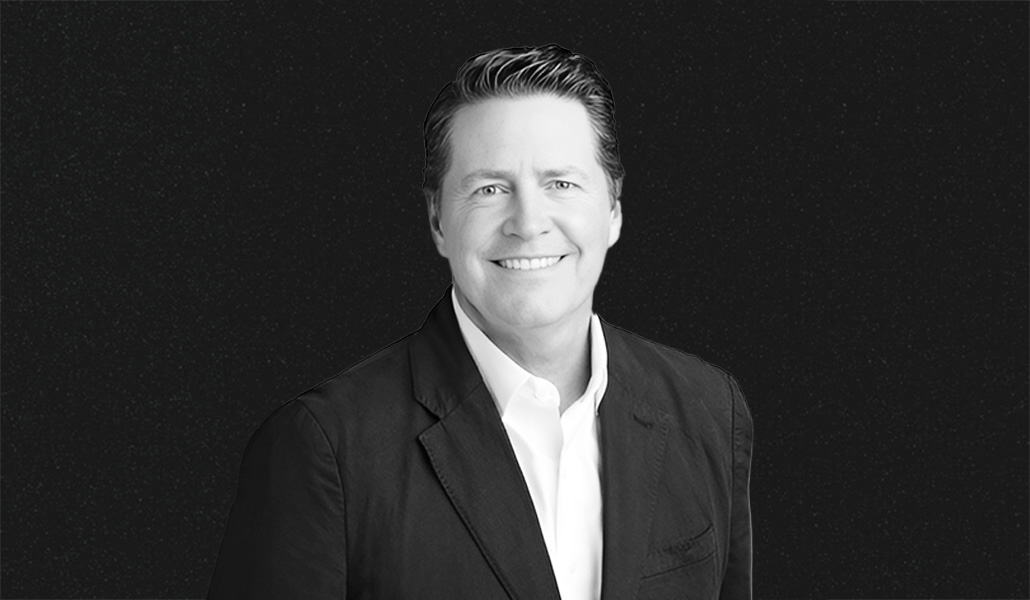
Almost a year after leaving Netflix, the veteran of the advertising industry Peter Naylor is back as a member of the board of directors of the Kochava advertising technology company.
Digiday has caught up with Naylor to unpack why he returns to the fray with Kochava, which he points out about the state of advertising technology and what it could mean for industry second -level players.
This conversation was slightly modified for more clarity.
How did your time far from an operating role moved your point of view on the management of the advertising industry?
The advantage of not being in a full -time operating role is that my opening has opened much wider than it has ever been. I currently have a portfolio career if you want. It includes providential investment and advice startups. I see small businesses led by ideas and led by founders, talk about all parts of the ecosystem. I speak to customers of their agencies all the time because I have developed relationships over the decades. I continue to work with professional associations such as IAB, MMA, she directs it, IRTS. Meet these organizations, listen to their leadership, speak with their members, informs my vision of the world in a really interesting way. And I am a main advisor at McKinsey, and I see different customers and their needs.
Why is the right time to return to industry – and why by a role of board of directors?
As a manager, I want to be where the action is, and I think Kochava is in the right place at the right time with advertisers and publishers. They have this complete view, and that’s what I appreciate, because I start with trends, because they inform everything.
I am all about the external objective, listening and market attention, which allows customers to easily use our products and services. And then tactically, I can’t wait to help Salesforce from Kochava with all their efforts, the editor or the advertiser side. So everything met for me and Kochava. I think they are ready for more growth.
How would you describe the transparency state of advertising technology today?
I think transparency is a subject of significant conversation, especially at the start where people negotiate large dollars. And one of the things that buyers are asking for is more transparency. In exchange for greater transparency, you could get a greater investment.
It also contributes to optionality. The more the buyer knows, the more he can flex and rotate things that work for them.
Where are the new most interesting areas of growth in advertising?
I think the largest areas of growth are probably triple: commercial media networks, connected television, TV streaming. And then I mentioned it earlier, I think people should pay attention to digital outside the house in particular.
How do you see the evolution of the measure and the allocation, in particular at a time when third-party mechanisms seem to be in opinion given the regulation and the response of platforms?
Optionality is the word I use all the time. You must have a very good conduct on your signal and all the signals at your disposal. This is perhaps an overused word, but the omnichannel is really important, because with all these signals which may or not remain, you must have a complete view. So, if the signal disappears, it is not the end of the world, because you have several signals. So, if you are well positioned for the future, it means that these things come and go, it is important, but it hardly matters, provided you have a complete view. So I think it will continue to be changes.
You have seen this industry move considerably over the past two decades. What is the most poorly understood trend right now?
There is a range of acceptance of announcements with consumers. One thing that we all know intuitively, but it may not be a summit, now more than ever consumers have the capacity to avoid advertisements if they wish. You have versions without television advertising and audio streaming. There are still advertising blockers on browsers. People who actively pay money to avoid advertisements are consumer marketing specialists. They represent a real range and incremental growth. So something that could be underestimated are avenues that can reach these people.
I was just in relief and I heard a lot of marketing specialists talking about the mobile environment. So let’s say that you sell Nike, for example. You have loyalists. Then you have people who will never be, on the Nike market. But then there are people who are totally in shoes, and they are total athletes or fashion, it may be Adidas, Puma or Nike or Converse or any brand.
I think this area is gaining in topical. Marketing specialists always want a wide range, but with the rise of the address and the ability to eliminate the public you don’t need, they will never consider you, or they are already with you, to focus on the most precious mobile customers.
Have you seen platforms go from scrappy to scale – what should second level players do differently to get out of the cycle of a limited scale and constant reinvention?
Constant reinvention is good, you must evolve over time. I look at Kochava; They started as a mobile, and now they are omnichannel and work with the Buy side and the sold side, or advertisers and publishers.
You really have to differentiate yourself through your actions. There is a sea of similarity with regard to the language that people use, but products and services must really provide.
Is there still room for a platform to carve out significant advertising affairs outside the Big Five-or is the bar too high now?
With the rise of AI combined with economic uncertainty, with the needs of marketing specialists, I think it is wide open. I don’t think big guys are never irremovable.
I remember an era when the three big ones were AOL, MSN and Yahoo. And we thought they were irremovable, what could we never do to take part. Now, the three big ones are Meta, Alphabet and Amazon, and you wonder, what will someone ever do to these real estate giants? But everything must pass.
The opportunity still exists for companies that meet the market with higher solutions that are timely and provide essential services.
You worked inside the closed gardens and watched the open web evolve from the outside. How do you see the health of the Internet opened right now from the point of view of monetization? Do you think that Open Web always has a chance to fight, or is it a losing game as long as advertising dollars continue to flow into closed ecosystems?
I think this is a huge opportunity with so many current changes on the market. When it comes to a buyer market, and I think it’s the third year now, it is a buyer market, it is interesting to see how aggressively they will behave as regards obtaining and the victory of offers, and when buyers have more choice and they do not feel painted in a corner, it is then that there is an opportunity to share Shift.
So I think that the open web is going well in the long term, because buyers have the choice, so the superior choices will draw attention.
Technology
Pendidikan
Pendidikan
Download Anime
Berita Teknologi
Seputar Teknologi